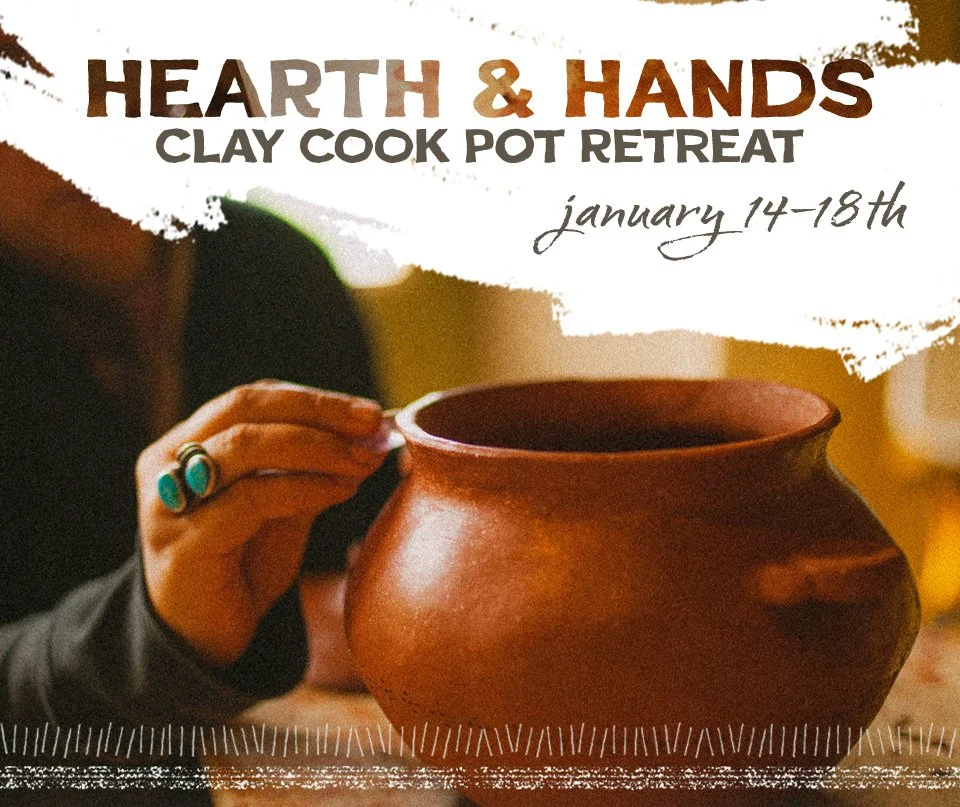
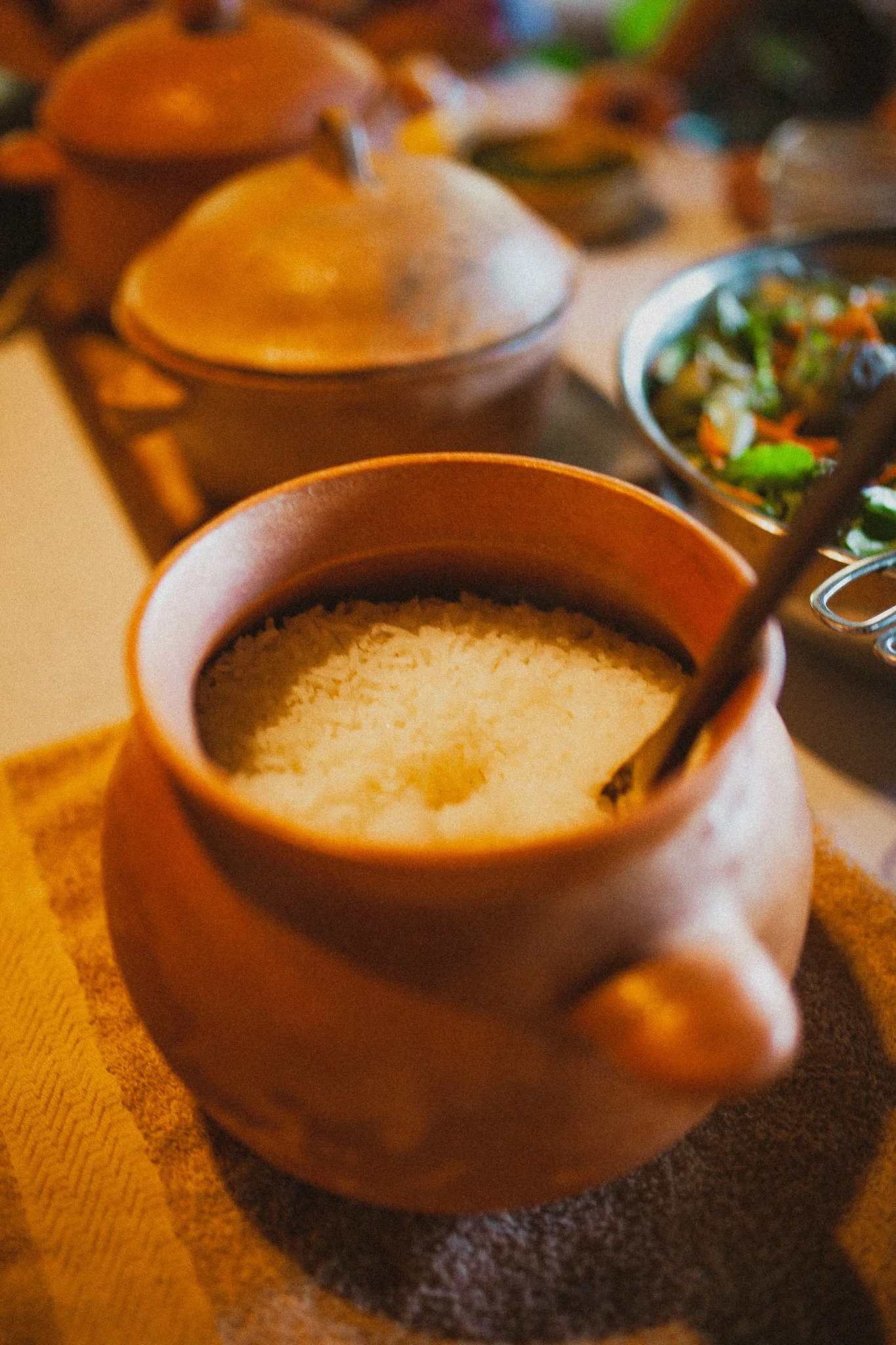
Cooking in clay connects us to an older, much slower memory of our humanity - ancestral recipes nourishing our bones and our hands remembering how to coil the clay.
Before metal pots, many cultures around the world shaped their local earth and fortified them in low fire temperatures. Made in this way, the clay cookware becomes resilient and functional, because the pores are open and responsive to thermal changes.
Clay pot cooking is found all over the world, in unique regional designs accompanied by historical meals that reflect the slow, flavorful methods of slow cooking. We have become so used to manufactured metal pots and pans that a clay vessel can feel intimidating. Because clay does not have the shock absorbency of metal turned right to high heat, they need to be slowly and uniformly warmed. They are not for frying, instead they shine most as slow cookers; rice, beans, stews, roasts, and juicy veggie medleys.
Hearth & Hands
Clay Cook Pot Making and Cooking Retreat
Thursday, Jan. 14th - Sunday, Jan. 18th
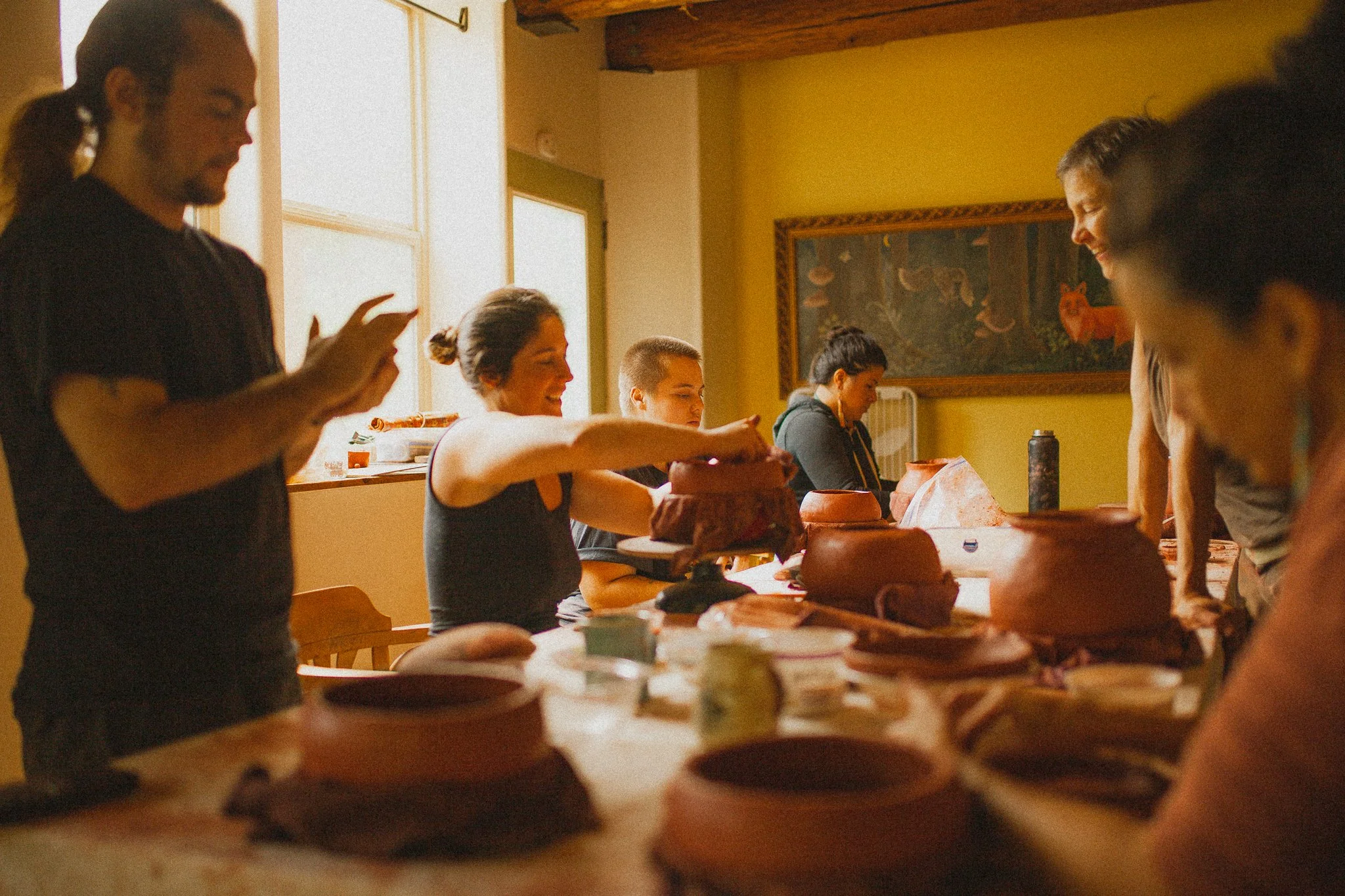
We invite you to join us for four spacious days of handbuilding a clay cook pot, with proper care to refine, polish and decorate. We will gather in the afternoon after a break to prepare beautiful clay pot dinners together guided by chef Gabriella Gonzalez of the Flowering Hearth. Along with learning new recipes, meal prep will be an opportunity to practice using the pots on the gas and wood stove.
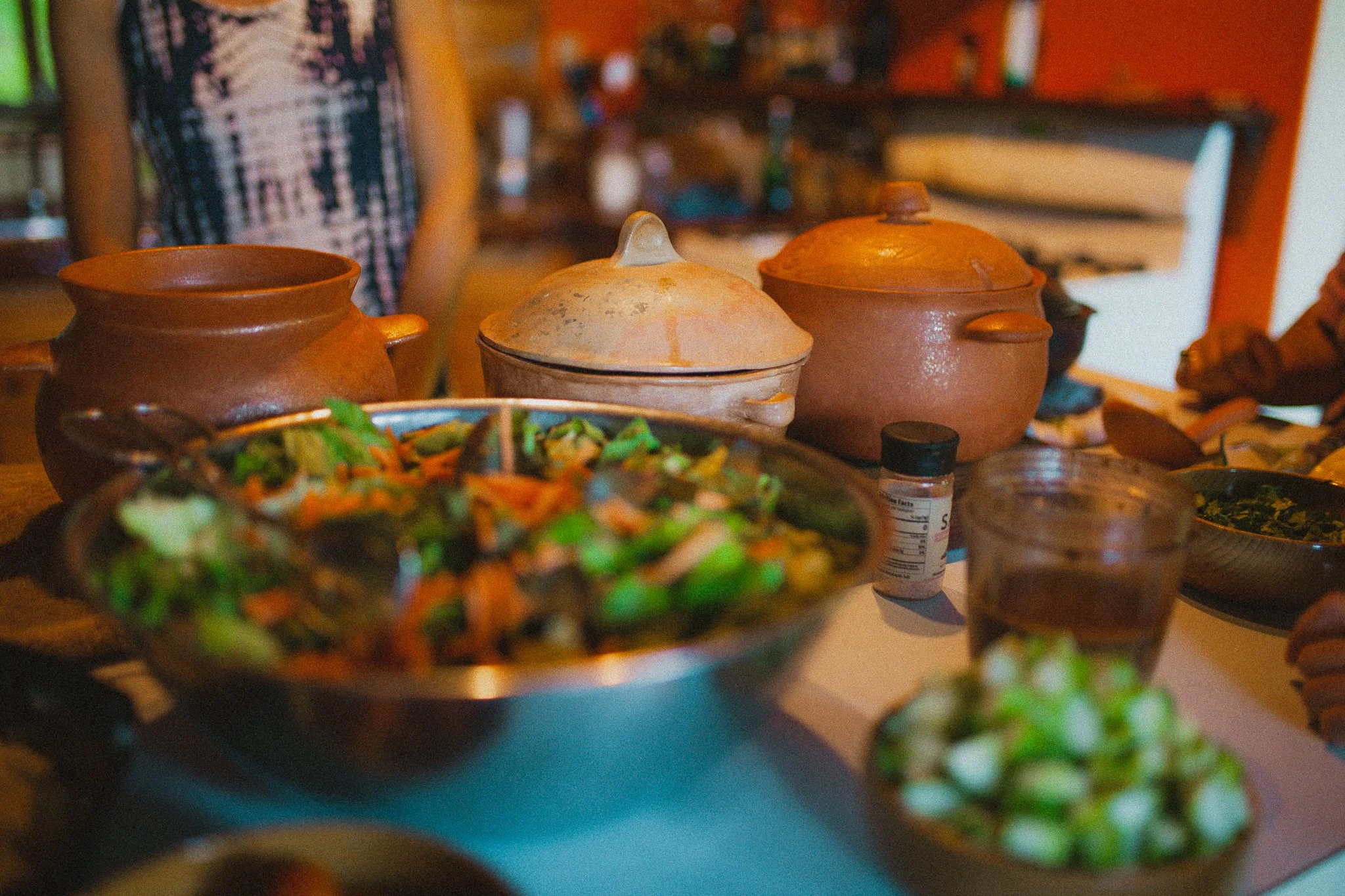
The recipes we prepare will have a strong influence of Gabriella’s Nicaraguan Chorotega and Polish Slavic roots, helping us remember how clay cooking vessels have been vital to various cultures throughout the world. When we cook in clay we are introducing another living element into our recipes to interact with and help us transform the ingredients within. The clay becomes an ingredient itself! Adding minerals, slow time and the spirit of the clay body into the food. Cooking in clay naturally invites us to move at a slower pace, tune into intuition, the season and create a space of ceremony.
We invite you to learn, research, ask members of your family if there's any knowledge or specific recipes of using clay pots in your lineage. We welcome these nourishing stories and recipes from our roots to be woven into the weekend.


Overview
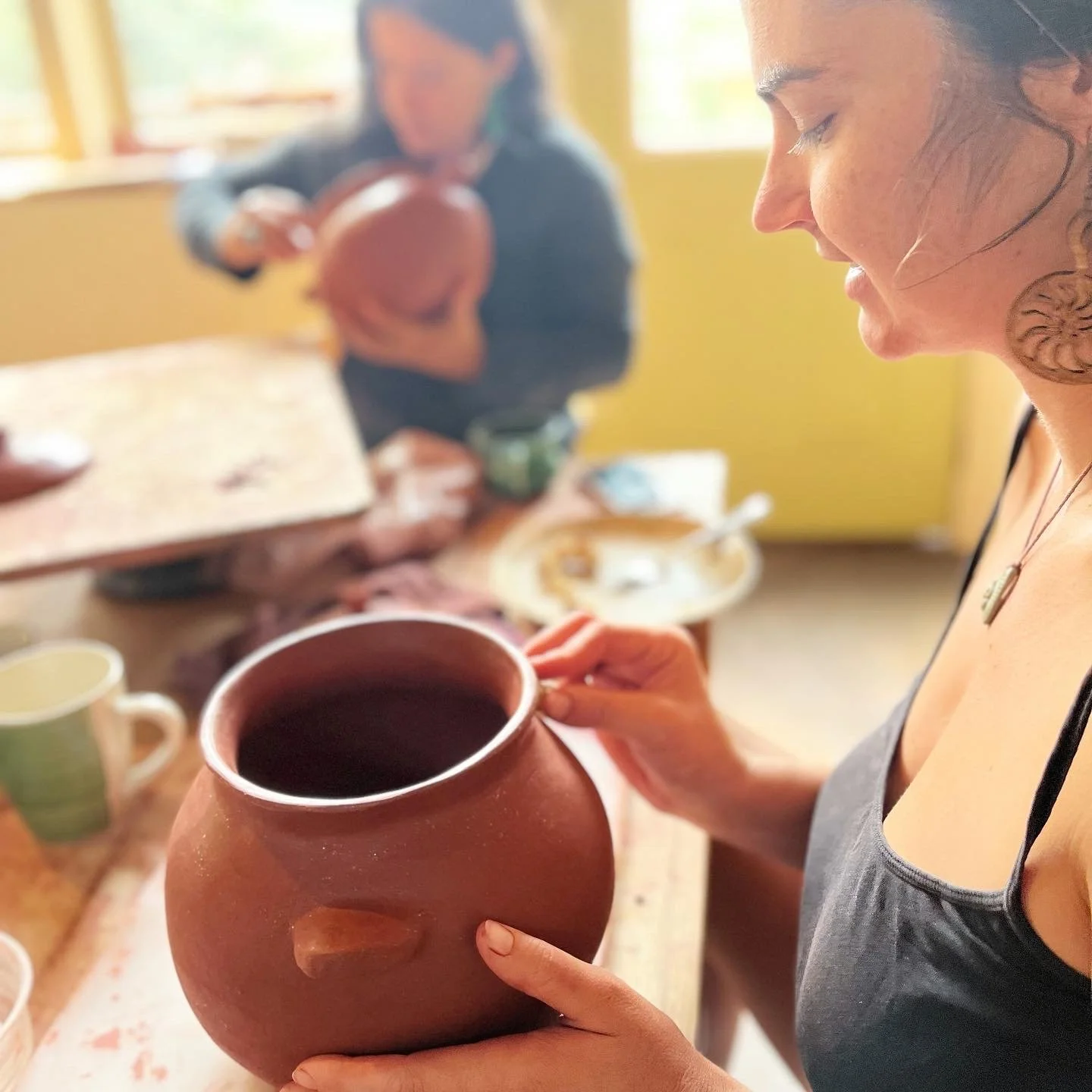
Thursday | Arrival early afternoon, intro to pot building techniques, forming our base and cooking our first dinner together
Friday| Coiling and smoothing, finishing the rim and adding handles, and cooking on fire!
Saturday | Refining the shape, making the lid, and beginning to polish, with cooking recipes and storytelling
Sunday | Polishing, decorating, singing beside the hearth, and our last dinner together
Monday | Morning departure!
All pots will be fired in the electric kiln after they have had time to dry. Once they are finished they can be picked up from the studio or shipped for an additional cost.
No prior experience with ceramics is necessary to participate, but your familiarity with hand building will dictate how large of a pot you can make during the four day retreat.
Costs
Full Workshop Fee is $375 standard price | $300 bipoc solidarity price*
Includes four full days of facilitated learning and all materials for making, as well as a simple soup lunch and wholesome, nourishing dinner each night. Breakfast and lodging is not included.
$150 deposit will hold your place, with a monthly payment option available at registration.
Lodging information is below. Payment for onsite lodging is separate and can be made online or brought as cash at the time of the retreat.
We currently do not have any funds available for scholarship, but if you are in a position to extend that gift please reach out. Thank you!
This workshop is taking place on the unceded indigenous lands of the Kalapuya. Understanding our materials as potters connects us intimately with the geologic, as well as peopled histories of the land. It is our responsibility as guests in these places to come with respect and curiosity for these histories and ecosystems, so that we are contributing to connection and protection and not perpetuating extraction and harm.
* Solidarity pricing: if you are Indigenous or Native American, Black, Latino/a/x/e, or someone of the global majority that has been prevented from connecting to, tending or protecting land as a result of colonial oppression there is a 20% waived fee for participation in this workshop. Please pay a deposit and select BIPOC at registration!
-
Center for Rural Livelihoods is a 40 acre forested sustainable education and retreat center in Cottage Grove, Oregon.
Located 2 hrs 30 minutes south of Portland. The Eugene airport is 50 minutes from the CRL (picks up at the airport can be coordinated).
Cottage Grove is a small timber town, but does have basic amenities like a small natural food store and larger conventional grocery store.
-
There are a few lodging options onsite for the week. Please indicate your lodging preference on the registration form.
Car and tent camping - $60 for 4 nights
Private dorm room* with bunk bed - $100 for 4 nights - can be single occupany or split cost with another participant. If you’d like to share a bunk room with another participant, please email for more information.
Shared sleeping room in the lodge - $75/wk.
All beds come with bedding and pillow, but extra cozy things from home will be appreciated.
*The private rooms do not have any insulation between the upstairs and downstairs, so sound is very permeable.Description text goes here
-
Breakfast will be on your own. There is a full kitchen (oven, toaster, blenders, etc) and fridge available for meal prep.
A simple soup lunch will be provided Friday through Sunday.
Dinners Thursday through Sunday night are provided.
Dinners are a wholesome, organic fair balancing veggies, grains, and ethically sourced meats (including fish, chicken, beef, and goat).
We accomodate food restrictions by putting common sensitivities on the side like gluten, dairy, and meat. Please indicate on the registration form if you have any allergens or preferences so we can plan ahead.

Hosanna White
Hosanna is dedicated to practicing slow hand crafts and ancestral skills that connect her with the source of her materials and the traditional folk ways of her Scottish and English ancestors. The time tending and preparing clay, the willow fields, or the goat herd, all restitch her life with a deep sense of the reciprocal relationships we are all still a part of.
Hosanna lives in the foothills of Western Oregon, a geologically rich landscape that has inspired her studio work, Whitesnake Arts. She blends bio-regional history and land stewardship into her artwork and place based pottery.
Gabriella Gonzalez
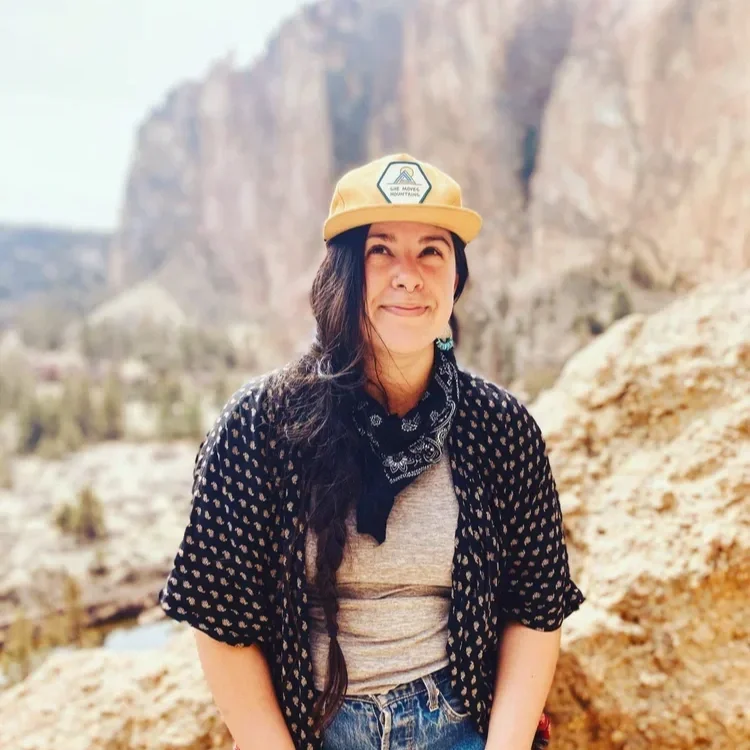
Gabriella (also known as Lago) is a Culinary Herbalist, Holistic Nutritionist, Abortion Doula and resident at Wapato Island Farm. Her roots are mixed Nicaragüense Indigenous, Latina & Slavic.
Her passion for cooking blossomed at a young age alongside her mom in the kitchen. She views food as a way to honor creativity, ancestors, plant and animal kin. She currently works as a private chef focusing on intimate event & retreat catering, postpartum meal services & community cooking classes through her business called The Flowering Hearth. Her culinary practice is rooted in animism and she views each kitchen tool, vessel and ingredient as alive and in alchemical co creation with the elements. She is inspired by weaving foods from her ancestry with PNW seasonality, herbs & foraged foods. Her passion lies in helping others explore their own food ways, stories and connection to land through eating and cooking and honoring food in a way that reminds us that food is Prayer, Ceremony and Medicina. Learn more about The Flowering Hearth here.