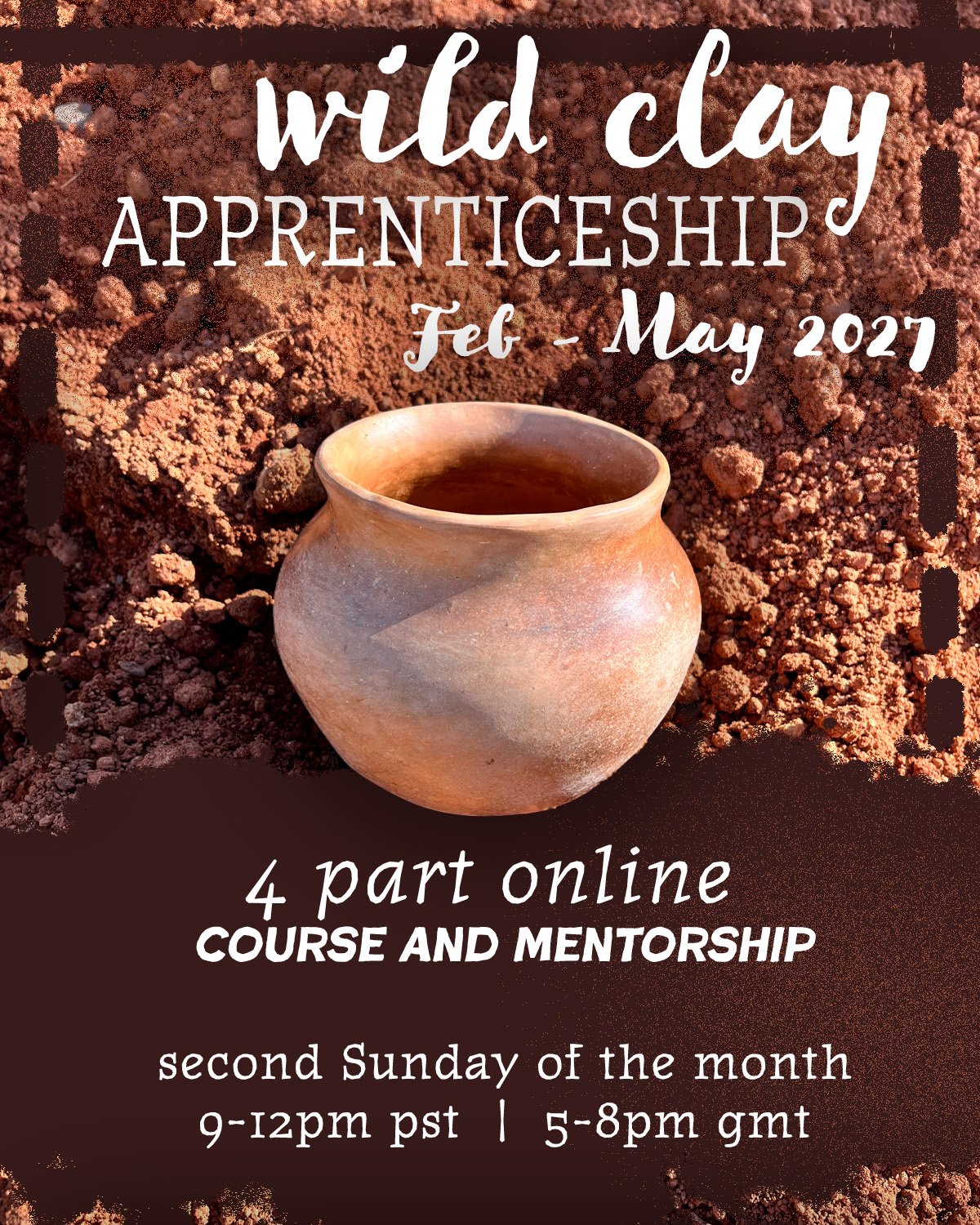
Pottery is one of the most ancient human crafts. Clay is made of the mantles and mountains, eroded by water and wind, and fortified by fire. The practice of foraging clay reminds us of the grandness of our living planet, as well as the responsiblity we carry to be steward and sustain these lands.
For this reason, our materials as potters reflect the connection or disconnection we have with the earth. We have inherited the conveniences of modern material manufacturing, providing easy to use global clay products. It is not our fault that so much of the knowledge inherient to this craft of sourcing, experimenting, and preparing our own materials from the landscape around us has been forgone and forgotten.
Given all that we have to gain from getting our hands dirty and doing it ourselves, I propose to you, why not?
In this Wild Clay Apprenticeship, we will weave history, ethics, ecology, and the sacred through an immersive study of the geology and chemistry of making ceramics with local materials! This is a wholistic course that values pragmatic tools and precise measurements, as well as matters of the heart and stories of the land.

Who is this for?
Literally anyone who is curious about how clay behaves of and where it comes from!
Beginners and professionals, hobbiest, earth science enthusiasts and lovers of land will all find this course fasinating, practical and applicable. It is a technical class, so all terms will be explained and built upon with time for Q&A, show and tell, as well as an online forum for follow up between classes.
This online cohort is for clay lovers to invest in their relationship with their ceramic materials and provides a supportive structure for participants to take steps at home and report back on their progress, successes and snags. With enough personal experimentation, participants will build the confidence in sourcing, processing, and firing with minerals where they live.
This cirriculum is an important foundation for anyone interested in teaching about wild clay, whether that looks like bringing it into to your community studio or to summer camps with kids.
Course Elements
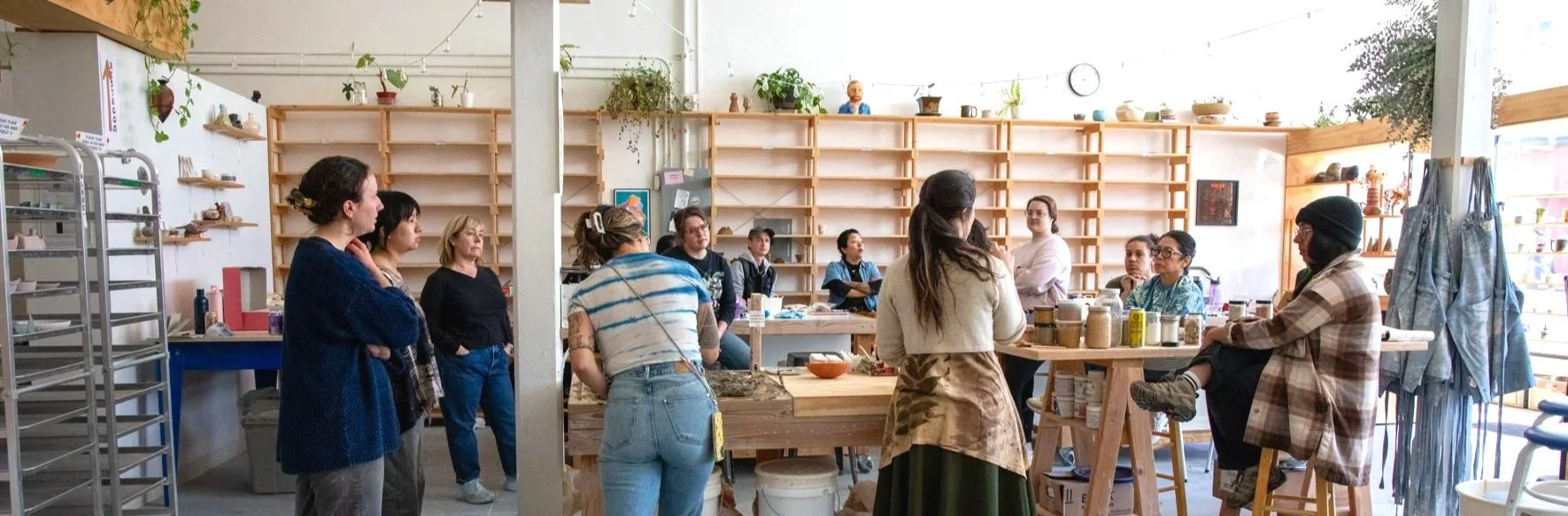
One class each month, from February to May, for three hours. Each class will have a specific focus, expanded on by class in more detail below. The lecture will be a mix of talking, videos, photos, and q&a discussion with a break in the middle and time at the end for students to share back progress in their wild clay work. The three hour class is always the second Sunday of the month on zoom. Recordings of class will be available shortly after each session for those who were unable to attend.
| February 14th, March 14th, April 11th, and May 9th |
In Between Classes
Our class will have an online forum component for praticipants to share photos and foraging stories, ask questions, and post results and resources.
If additional mentorship or troubleshooting one-on-one would be helpful, participants are welcome to reach out about scheduling a video call for an additional cost.
Participants are encouraged to consider what their goals are for this apprenticeship and find time to work towards those goals between classes. The structure of this course is intentionally spacious so that as questions or challenges arise, students can get feedback and encouragement.
Example goals might be:
purchasing or scavenging clay processing tools
gathering and processing clay from your area
practicing ethical harvesting and listening to the land
researching your region’s geology and mining histories
making blends and firing tests of your hand dug clay
preparing enough clay to make a collection of pottery
Course Content
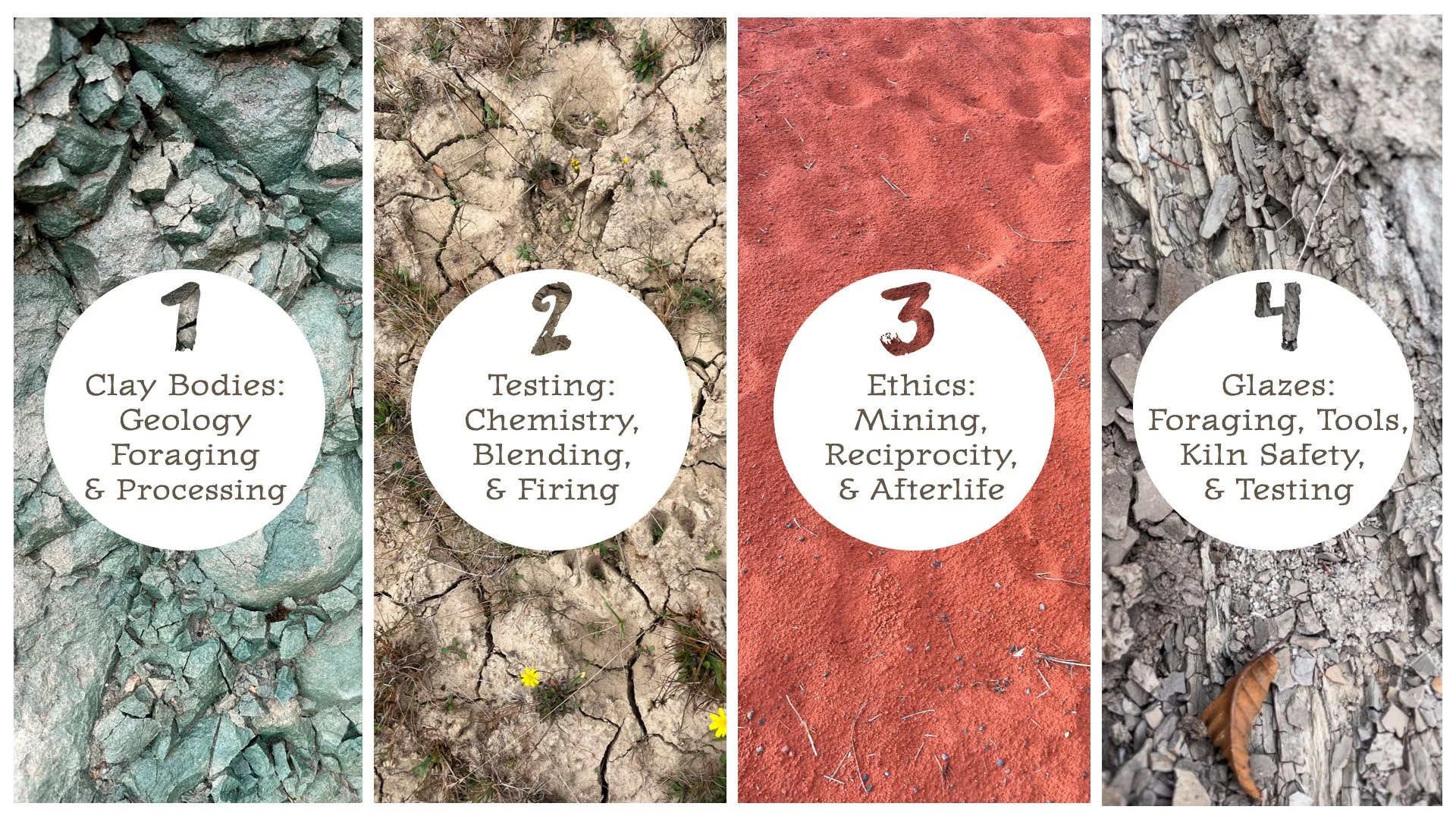
Sunday February 14th Online: Building a relationship with the many personalities, textures, and origin stories of wild clay begins with learning the geological narrative of our local landscape!
In this class we also dive into identification of soil types, testing for heavy metals, foraging resources + ethics, how to field test - AND - most crucially, once you’ve gather some earth, how and why to wet process your wild clay! Includes a thorough walk through of the clay cleaning process, and all the tools and tricks learned from building out a home set up to make large amounts of clay every year.
Sunday, March 14th Online: This month, we step back and look at the history of ceramics, the chemistry of clays, and an overview of the distinct firing ranges - low, mid, and high fire - and firing methods - ground firing, wood fire kilns, gas, and more!
We’ll have a good dabble in the theory of blending and building clay bodies, as well as discuss how to test your clay for absorbancy and shrinkage, kiln protocols, and further practices for getting consistent, repeatable results.
Sunday, April 11th Online: In April, we will be looking more closely at the implications and ethics of both mined ceramic materials and foraging earth. As we begin to build on where and how to forage our own ceramics materials, we also will contemplate the afterlife of the ceramics we make; their durability and decomposition.
Sunday, May 9th Online: In our last class, we will identify local materials that make up simple glass forming recipes and show examples of natural glazes that myself and other potters have created. Glaze chemistry is complicated, but when you gather your own materials, our recipes have the potential to be very simple. So, we will map out what is possible with foraged glazes if they are not made from commerical products like feldspar, frits, or metal oxides and get into experimention approaches for scaling tests to full size pieces and testing new batches.
Costs
Full Workshop Fee is $375 standard price | $300 bipoc solidarity price*
Pay the full amount or a $150 deposit will hold your place, with an automatic monthly payment option available at registration.
This workshop is first and foremost about land. Understanding our materials as potters connects us intimately with the geologic, as well as peopled histories of the land. We have a responsibility to these places to come with respect and curiosity for these histories and ecosystems, so that we are contributing to connection and protection and not perpetuating extraction and harm.
* Solidarity pricing if offer for those who identify as Indigenous or Native American, Black, Latino/a/x/e, or someone of the global majority that has been prevented from connecting to, tending or protecting land as a result of colonial oppression. There is a 20% waived fee for participation in this workshop. Please pay a deposit and select BIPOC at registration!
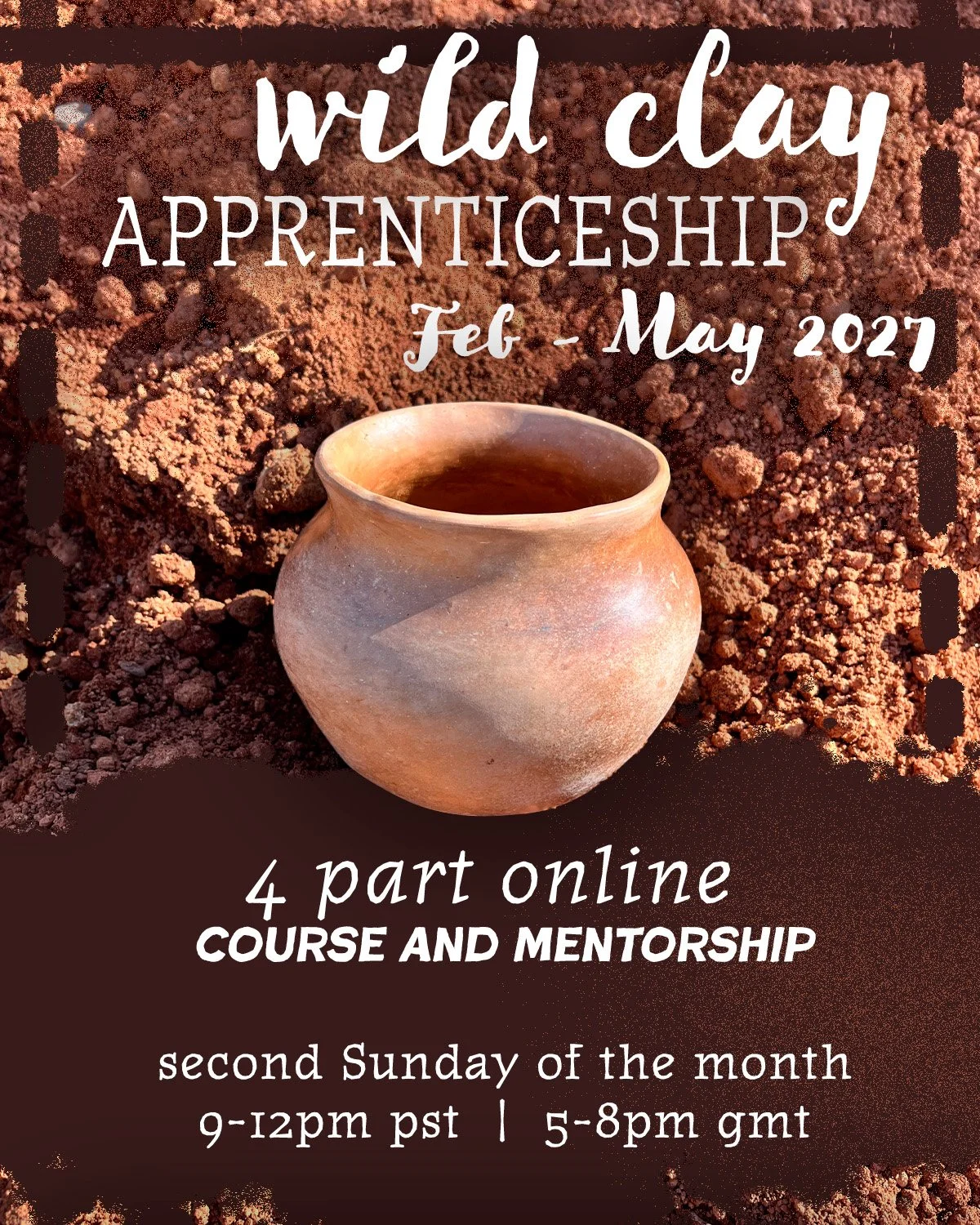
Full class description see workshops!
100% refund before January 14th, deposit is not returned after January 14th
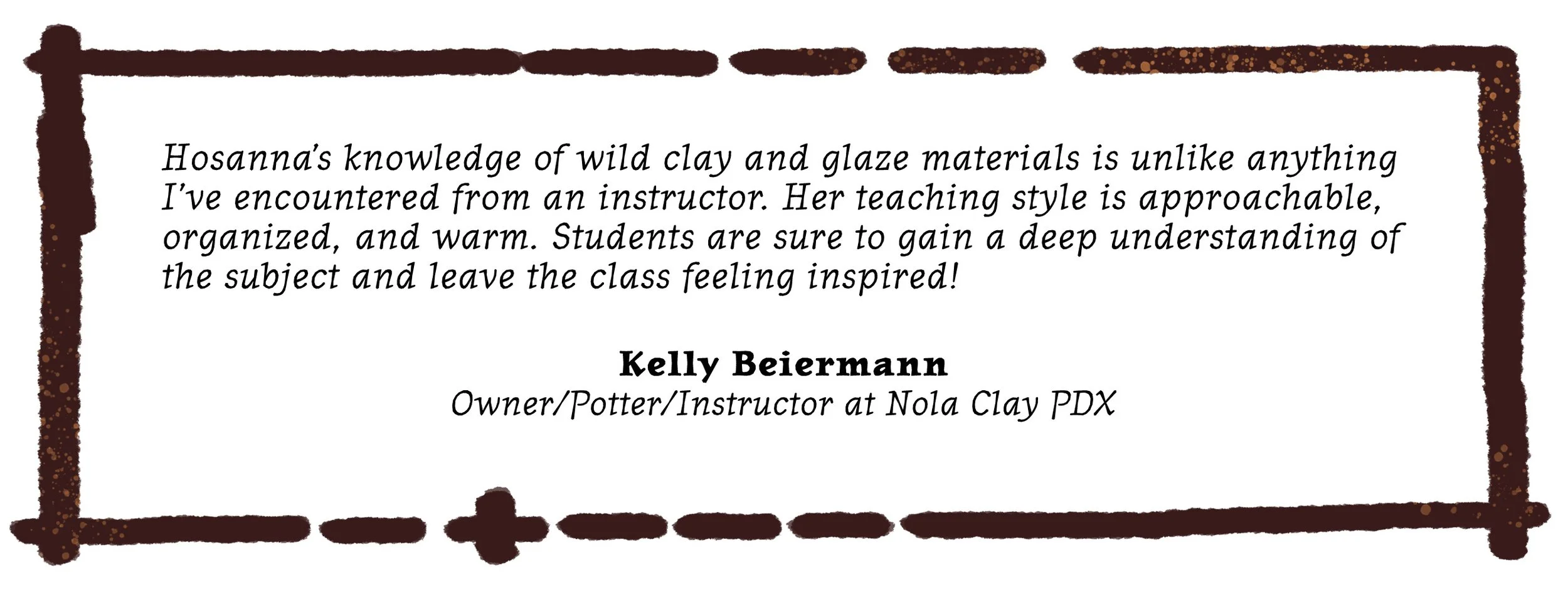
Testimonials
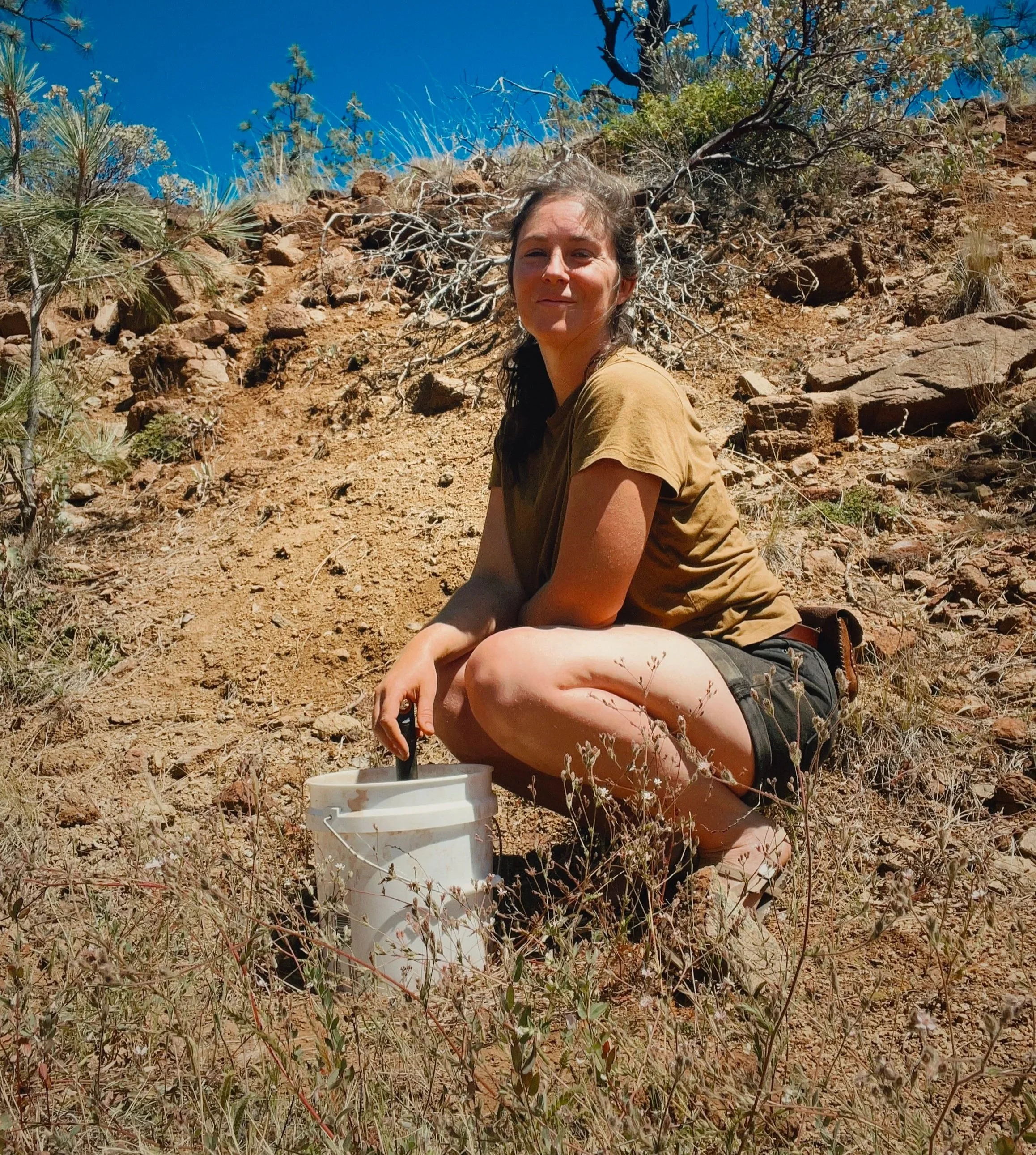
Instructor: Hosanna White
Hosanna resides in the foothills of Western Oregon, a geologically rich landscape that has inspired her studio work, Whitesnake Arts. She blends bio-regional history and land stewardship into her artwork and place based pottery.
She has built her knowledge of the diverse clay types of the Pacific Northwest one experiment at a time over the last decade and built an impressive library of over 50 samples from clays across British Columbia to the Bay Area. She is fueled by a contagious passion for earth, creativity, liberation and magic that propels her deep into the textbooks, as well as the hills!